
Which Cambodia visa type do you need?
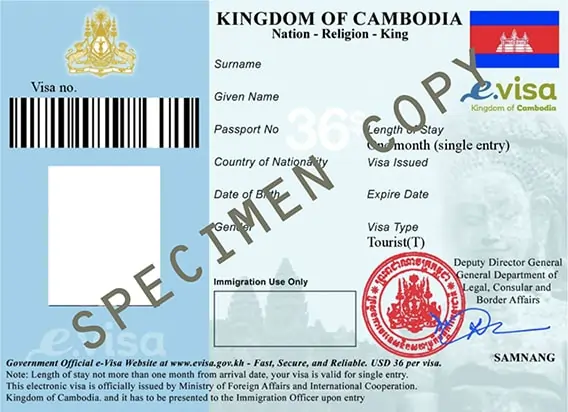
Cambodia’s entry system is straightforward once you know the letter codes. Most holidaymakers need a Tourist Visa (Type T). Travellers coming for meetings, projects or longer extension plans usually look at the Ordinary / Business Visa (Type E). Official missions use diplomatic, official or courtesy categories, while a smaller share of visitors ask about transit or the special Khmer-linked Type K.
You can arrange many of these permissions online through Cambodia eVisa, collect a stamp at visa on arrival where available, or apply at a Cambodian embassy. This guide explains the Cambodia visa types travellers search for most often—stay length, validity for first entry, extensions, ports and the separate e-Arrival Card—so you pick the category that fits your passport and itinerary.
Cambodia visa types at a glance
Use this table when you are still deciding between Cambodia eVisa types or an embassy application. Details can change—always read the current form and your approval letter.
| Code | Common name | Typical purpose | Usual stay | Extension note |
|---|---|---|---|---|
| T | Tourist | Holiday, sightseeing, family visit | About 30 days | Often once, about 30 days |
| E | Ordinary / Business | Meetings, business, other ordinary stays | About 30 days initially | Wider options after arrival |
| D | Transit / crossing | Short passage / crew or transit cases | Short (days) | Generally limited |
| A | Diplomatic | Diplomatic missions | Mission-related | Mission rules apply |
| B | Official | Official / recognised organisation missions | Mission-related | Mission rules apply |
| C | Courtesy | Courtesy / cooperation cases | Case-by-case | As authorised |
| K | Special (Khmer link) | Eligible Cambodian origin on foreign passport | Tied to passport rules | Special category |
1. Tourist Visa (Type T)

The Cambodia tourist visa Type T is the category most foreign visitors need. It covers private travel—temples, beaches, family visits and short leisure stays. Nationalities that are not visa-exempt generally must hold Type T (or another qualifying visa) before or upon entry.
- Purpose: tourism and private visits—not local employment
- Entry: typically single entry
- First entry window: commonly within about three months of issuance for eVisa letters
- Stay: up to about 30 days from the date you enter
- Channels: Cambodia eVisa, visa on arrival at authorised posts, or embassy visa
- Fee: visa fee applies; process fee applicable for online payment (see fees)
- Processing: eVisa files often clear in about three business days when documents are clear
- Extension: usually one extension of about 30 days through Immigration in Cambodia
If your whole trip is sightseeing and hotels, Type T is almost always the right answer. Deep detail and application steps sit on the tourist eVisa page.
2. Ordinary / Business Visa (Type E)
The Cambodia business visa Type E—also called an ordinary visa—is issued when travel does not fit the tourist category. Meetings, conferences, short professional visits and many longer-stay plans start with Type E. Online Type E coverage has been opened more widely for applicants from different countries through the official eVisa channel.
- Purpose: business and other ordinary purposes supported by your documents
- Entry: typically single entry for the initial permission
- Stay: commonly up to about 30 days from entry before any extension
- Why people choose E: after arrival, extensions may cover longer periods (for example one, three, six or twelve months) depending on purpose and immigration rules
- Work warning: holding Type E is not the same as holding a work permit; paid local employment needs the correct labour authorisation
- Fee: visa fee applies; process fee applicable online
Travellers who expect to remain beyond a short holiday often prefer Type E from the start so they are not locked into a tourist extension that can only be used once. Read the business eVisa guide before you upload documents.
3. Transit and short-passage notes
Transit questions come up when a flight touches Cambodia on the way to a third country. If you stay on the same aircraft and never clear immigration, you often do not need a separate Cambodia visa. The picture changes if you collect bags, overnight in Phnom Penh or Siem Reap, or enter the country for any reason—then a tourist Type T (or another qualifying visa) is the usual path.
A dedicated transit / crossing category (sometimes referenced as Type D) exists for specific short-passage or crew situations. Rules are narrow and not a substitute for a holiday visa. Practical routing advice is on the transit visa page.
4. Diplomatic (A), Official (B) and Courtesy (C)
These Cambodia visa types serve official relationships rather than leisure travel:
- Type A — Diplomatic: for diplomatic passport holders and related mission travel
- Type B — Official: for official passports and recognised governmental or international-organisation missions
- Type C — Courtesy: for courtesy or cooperation cases accepted by Cambodian authorities
Eligible applicants may use the online eVisa channel for A, B and C in addition to embassy sticker visas, depending on current ministry rules. Supporting notes and invitation papers matter more here than for a tourist file. Private holidaymakers should not select these codes.
5. Special Visa Type K
Type K is a special category for people of Cambodian origin who travel on a foreign passport and can prove the required family or nationality link. It is not a standard tourist product. Applications usually need civil-status evidence and are handled through an embassy or authorised channel. If you do not have that link, ignore Type K and use Type T or Type E instead. French dual-heritage cases and similar situations are often discussed on nationality guides such as the France page.
How to obtain Cambodia visa types: eVisa, arrival or embassy
Cambodia eVisa (online)
The official electronic system lets eligible applicants submit Type T and Type E (and, where offered, A/B/C) without visiting a mission. You need a passport valid for at least six months from entry, a clear biodata scan, a compliant digital photo, an email address and a card for payment. Processing is commonly about three business days. Print the approval letter and use an authorised port of entry—not every land border accepts eVisa.
Visa on arrival
At major airports such as Techo (Phnom Penh area), Siem Reap Angkor and Sihanoukville, and at many land posts, eligible nationalities can request tourist or business visas on arrival. Expect a passport photo and cash in US dollars for the visa fee shown at the desk. Queues grow after overnight long-haul flights, which is why many travellers prefer an approved eVisa. See visa on arrival.
Embassy or consulate
Sticker visas and special categories remain available through Cambodian missions abroad. Embassies generally do not “fix” an online eVisa file for you—the eVisa office manages those applications. Directory: embassies & consulates.
Validity for entry versus length of stay
Two dates confuse first-time applicants. Validity (often about three months from issue for eVisa letters) is the window in which you must enter Cambodia. Length of stay (often about 30 days) starts when immigration admits you. Entering on the last day of the validity window still only gives you the stay printed for your visa type—not another three months inside the country.
Overstays attract daily fines and can lead to refusal of future entry. Extend on time through Immigration if you need more days. Tourist Type T extensions are usually limited; Type E extensions depend on purpose and paperwork.
e-Arrival Card is not a visa type
Cambodia’s digital e-Arrival process collects immigration, health and customs information before you land. Air passengers should complete it within about seven days before arrival and keep any QR or confirmation ready. Some airports also emphasise digital entry records alongside or instead of older paper forms.
Completing e-Arrival does not cancel the need for Type T, Type E or another visa when your nationality requires one. Treat the card as step two after the visa—not a replacement. Border openings, especially on land routes, can change; confirm checkpoint status before you travel overland.
A simple way to choose your category
- If you are on holiday or visiting family for under a month, start with Type T.
- If you need business meetings or expect longer extensions after arrival, look at Type E.
- If you never leave the aircraft on a pure connection, you may need no visa—confirm with your airline.
- If you travel on a diplomatic or official passport for a mission, review A / B / C with the inviting authority.
- If you have documented Cambodian parentage on a foreign passport, ask about Type K at a mission.
- Whatever you choose, finish the e-Arrival Card before an air arrival.
Check whether your nationality appears on the eligible countries list or the visa-exempt list before you pay. Photo rules for uploads are on the photo requirements page.
Frequently asked questions — Cambodia visa types
Answers for searches such as Cambodia eVisa types, Type T vs Type E, and which Cambodia visa you need.
What are the main Cambodia visa types for travellers?
Most visitors use Tourist Visa Type T for holidays or Ordinary/Business Visa Type E for meetings and longer extension options. Other categories include Transit (D), Diplomatic (A), Official (B), Courtesy (C) and Special Visa K for eligible Khmer nationals holding a foreign passport.
What is the difference between Cambodia Type T and Type E visas?
Type T is for tourism and private sightseeing. Type E (ordinary/business) covers business visits and other purposes that do not fit tourist rules. Both commonly allow a single entry and about 30 days stay after arrival. Type E usually offers more extension choices after you enter Cambodia.
How long is a Cambodia tourist eVisa valid?
A Cambodia tourist eVisa (Type T) is typically single entry. You usually must enter within about three months of issuance, then stay up to 30 days from the entry date. Validity for first entry and length of stay are not the same thing—read both dates on your approval letter.
Can I get Cambodia visa types online as an eVisa?
Yes. Tourist Type T and Ordinary/Business Type E are widely available through the Cambodia eVisa system. Diplomatic Type A, Official Type B and Courtesy Type C may also be available online for eligible applicants, alongside embassy sticker options. Confirm the category that matches your passport and purpose before you apply.
Do I still need a Cambodia visa if I complete the e-Arrival Card?
Yes. The e-Arrival Card is a separate digital entry form for immigration, health and customs details. It does not replace a visa. Air travellers should complete it within about seven days before arrival even when they already hold an approved eVisa.
Can a Cambodia Type T visa be extended?
A tourist Type T permission can usually be extended once for about one month through Cambodian Immigration after arrival. Plan the extension before the current stay expires. Type E holders may have additional extension periods depending on purpose and supporting documents.
Is a Cambodia transit visa required for a same-plane connection?
If you remain airside on the same aircraft and do not clear immigration, a transit visa is often unnecessary. If you leave the airport, change terminals in a way that requires entry, or stay overnight in Cambodia, you normally need a qualifying visa such as tourist Type T.
How much do Cambodia eVisa types cost?
Online tourist and business eVisa applications require the applicable visa fee, with process fee applicable at payment. Visa on arrival is commonly paid in cash in US dollars at the checkpoint. Confirm the total shown on the payment screen or desk before you pay.
Related Cambodia visa pages
- About eVisa — how the electronic system works
- Tourist Visa Type T — requirements and stay rules
- Business Visa Type E — ordinary / business category
- Transit information — connections and short passage
- Visa on arrival — airport and border option
- Fees — visa fee and process fee notes
- Eligible countries — nationality directory and guides
